How the collapse of America's most famous energy trader built the most profitable one. Enron's traders, Amaranth's book and the banks' retreat all ended up in the same place: a Chicago hedge fund that spent twenty years rebuilding Enron's core idea inside a firm that could survive scrutiny.
By Maurice Tessier114 sources23 min read
Introduction
A tale of two Kens
The story of American power trading over the last forty years runs through two men named Ken.
The story in brief
Enron turned a 1985 pipeline merger into North America's dominant gas and power trader; EnronOnline executed 548,000 trades worth $336 billion in notional value in 2000 (1, 2).
It filed for bankruptcy on December 2, 2001, with $63.4 billion in assets, the largest in US history to that date (3).
Ken Griffin flew 16 people to Houston the day Enron filed and hired the leadership of its quantitative research team (4).
When Amaranth lost $6.6 billion on gas in 2006, Citadel ended up with its energy book, buying JPMorgan's half for $725 million (5, 6).
As regulators pushed banks out of physical commodities, Citadel hired their people and built a physical gas business (7, 8).
The commodities unit made about $8 billion in 2022, and Griffin puts its lifetime haul at about $30 billion (9, 10).
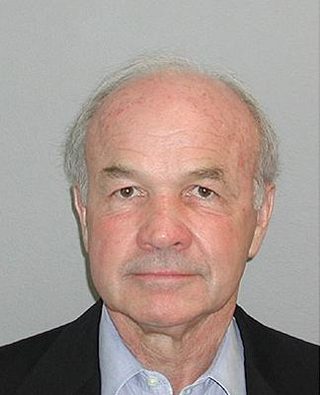
Kenneth Lay built a company that understood, before almost anyone, that deregulated gas and power could be traded like financial assets. He also ran a company that booked future profits up front under mark-to-market accounting (11), used partnerships to dress up its results (12), and, according to the SEC, misled employees about his own sales of Enron stock (13). He was convicted on all six counts in May 2006, died that July, and had his conviction vacated because he never got to appeal (14, 15).
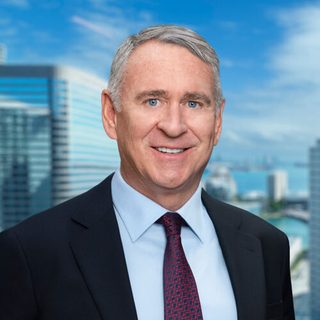
Kenneth Griffin took the part of Enron that worked. He began recruiting its traders the day after the bankruptcy (16, 17), bought Amaranth's book when that fund failed, and hired the people that banks let go when regulators pushed them out of physical trading (7). His commodities business has made about $30 billion (10), and Forbes put his real-time net worth at $57.2 billion on October 3, 2026 (18).
The difference between the two Kens is not the strategy. It is the accounting, the governance and the source of capital. Enron reported $100.8 billion of revenue against $94.5 billion of cost of goods (19) and propped up its earnings with hedges backed by its own stock (12). Citadel trades with investors' capital and gives profits back when it cannot use them, $5 billion of them at the end of 2025 (20). The traders, the data and the appetite for physical markets are the same.
Deakin and Konzelmann drew the wider lesson in 2003: "The true lesson of Enron is that until the power of the shareholder value norm is broken, effective reform of corporate governance will be on hold" (21).
Part 01
1985-2000
The machine
Houston
A pipeline company decides to become the market.
In short
The 1985 InterNorth and Houston Natural Gas deal was a $2.3 billion pipeline merger (1).
FERC Orders 636 (1992) and 888 (1996) opened gas pipelines and power lines to all traders (22, 23).
The SEC approved mark-to-market accounting for Enron from 1992; Enron applied it from 1991 (11).
Jeffrey Skilling, an ex-McKinsey consultant hired in 1990, built the trading business and became CEO in 2001; Lay stayed chairman (24, 19).
Enron began as a pipeline merger. In May 1985 InterNorth of Omaha offered $70 a share for Houston Natural Gas, and on July 16, 1985 the $2.3 billion deal closed, creating what UPI called "the nation's first border-to-border and coast-to-coast natural gas pipeline system" (1). The combined company had 37,000 miles of pipeline and about 13,700 jobs, and Kenneth Lay, the Houston chairman, became its chief operating officer (1). The combined company became Enron (25).
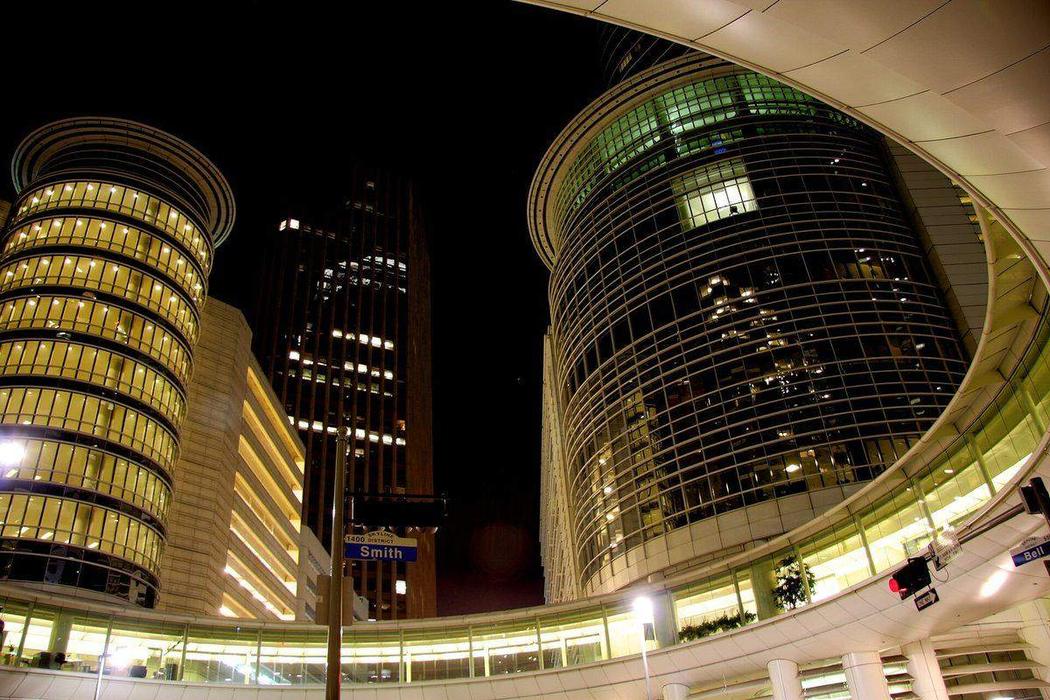
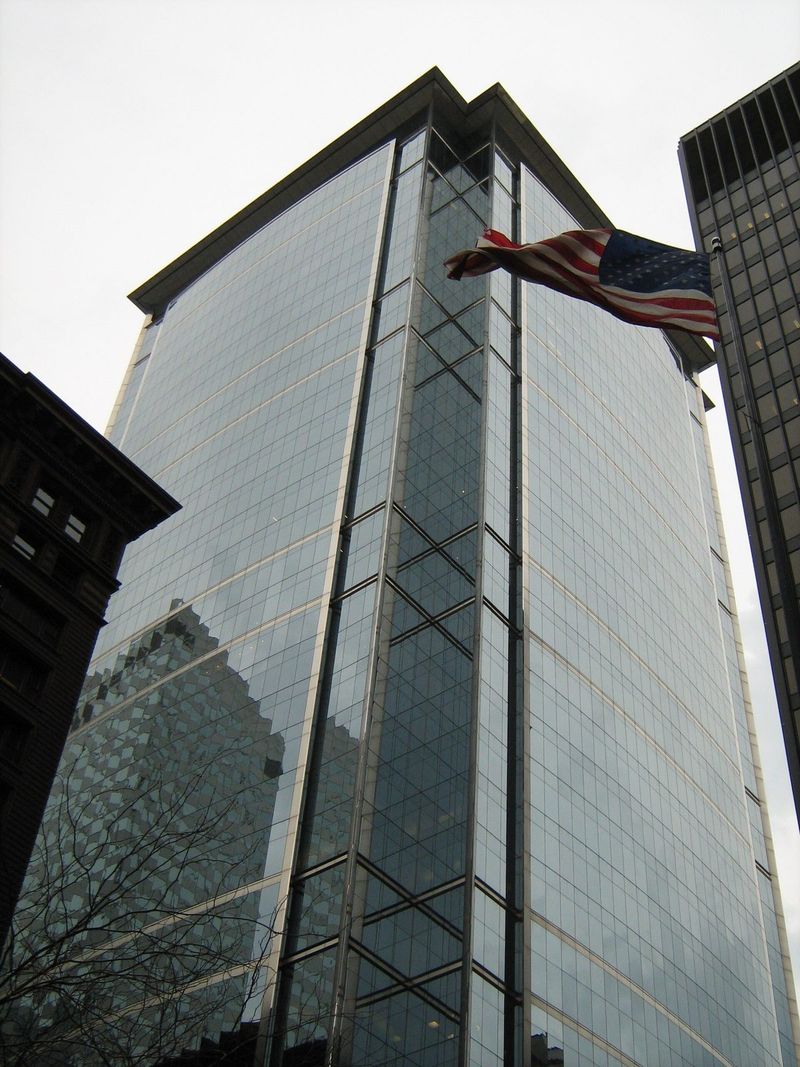
The Enron complex in downtown Houston. Photo: Alex, CC BY 2.0
Pipelines were a regulated, slow business. Washington then changed the rules. In April 1992 the Federal Energy Regulatory Commission voted 5-0 for Order 636, which forced interstate pipelines to "unbundle their charges, providing separate charges for the gas and for transportation of the gas" (22). Gas became a commodity that anyone could buy and ship. On April 24, 1996 FERC issued Orders 888 and 889, which did the same for electricity transmission: every public utility had to file tariffs "providing nondiscriminatory access to all wholesale users" (23, 26). Enron set out to stand in the middle of both markets as the dealer. An SEC release later summed up the result: "From 1985 through mid-2001, Enron grew from a domestic natural gas pipeline company into a large global natural gas and power company" (27).
Accounting came first. By letter dated June 11, 1991, Enron told the SEC's Office of Chief Accountant that it wanted to use mark-to-market accounting for the gas trades of its new subsidiary, Enron Gas Services (11). Under that method, when the unit signed a gas contract it booked "the present value of all future profits from that contract at the time the contract was signed" (11). SEC staff suggested Enron also report its results the old way until the numbers proved reliable. Enron refused, saying the figures would not be "significantly dependent on subjective elements" (11). That was the weak point the SEC staff had flagged: the reliability of the measurements behind the profits booked up front (11). Healy and Palepu later argued that the governance and incentive problems of the auditors, analysts and other gatekeepers who were supposed to check such numbers "may have contributed to Enron's rise and fall" (28). The SEC sent its no-objection letter on January 30, 1992, for use from 1992. Enron then wrote back that it would apply the method from the start of 1991, a year earlier than approved, and the SEC never answered (11).
The strategy had an author, and it was not Lay. Jeffrey Skilling spent 1979 to 1990 at McKinsey & Co., where he consulted for Enron, before Enron hired him in August 1990 (24). He built the trading business: from June 1995 to December 1996 he was chief executive of Enron Capital & Trade Resources, the trading arm, and from January 1997 he was president and chief operating officer of the whole company (19). Lay remained chairman, and in February 2001 Skilling took over from him as chief executive as well (19). The SEC later described Skilling as "the senior manager of the company's commercial operations and finances," who "closely supervised on a day-to-day basis the activities of each of Enron's business units" (24). He summed up the model himself, in words Deakin and Konzelmann quote: "[we are] a company that makes markets. We create the market, and once it's created, we make the market" (21).
The second step was technology. In late 1999 Enron launched EnronOnline, a website where customers could see Enron's prices and trade "with Enron as principal, with no direct interaction" (19). Enron was the counterparty on every trade, so the site was less an exchange than a shop window for Enron's own book. In its first full year wholesale volumes rose 59 percent (19). The 2000 annual report boasted that EnronOnline "had executed 548,000 transactions with a notional value of $336 billion" by the end of that year and that by the fourth quarter it accounted for "almost half of Enron's transactions over all business units" (2). Transactions per commercial employee rose from 672 in 1999 to 3,084 in 2000 (2). By late 2001 the site was handling more than 5,500 transactions a day worth about $2.7 billion (29).
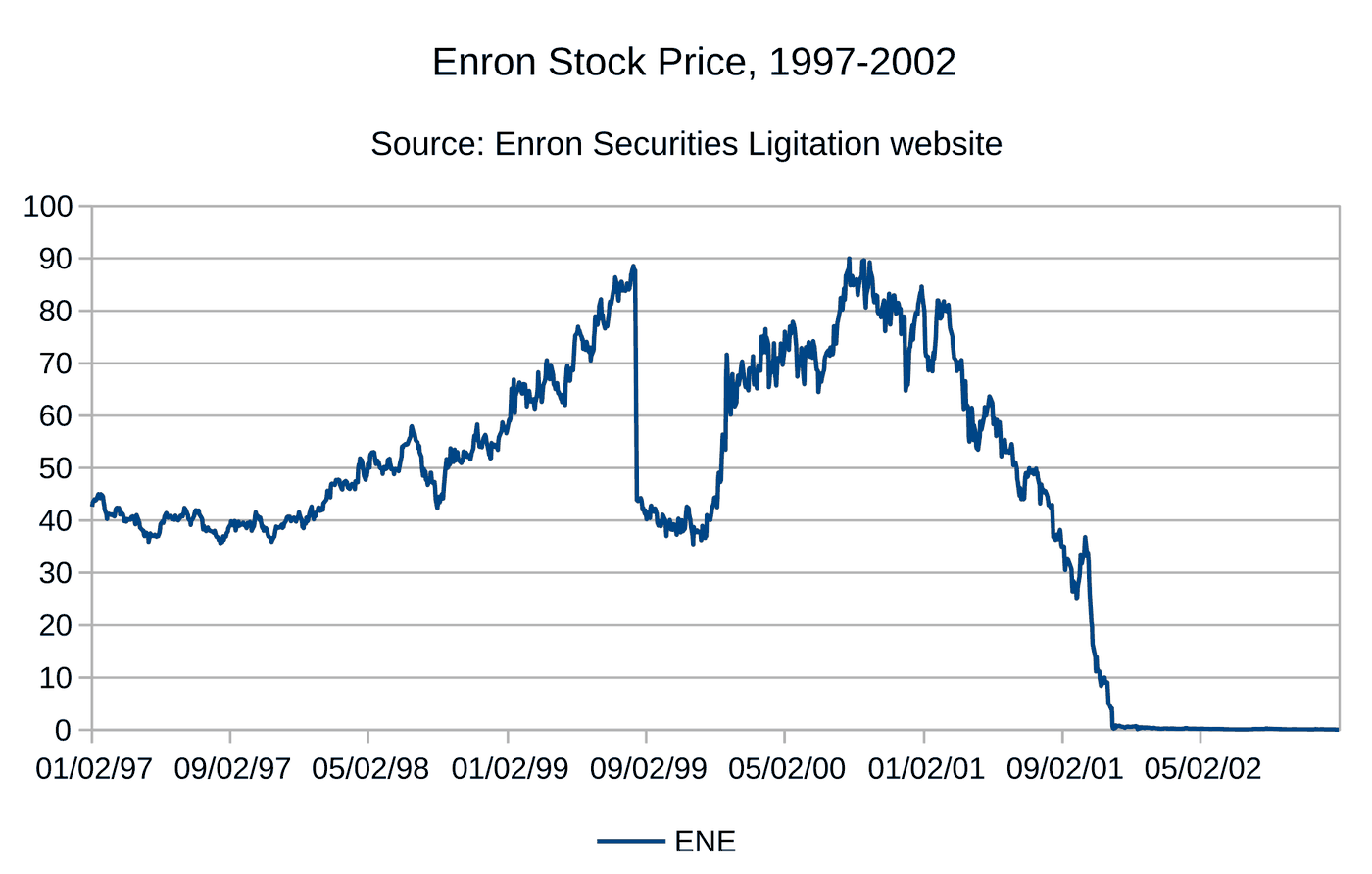
The headline numbers were enormous. Enron reported total revenues of $100.8 billion for 2000, up from $40.1 billion in 1999 (19). But in the same filing the cost of the gas, power, metals and other products it sold was $94.5 billion (19). Trading revenue was counted at the full value of what changed hands, not the margin Enron kept, which is why a trading house with about 20,600 employees could appear to be one of the largest companies in America (19, 30). The stock followed the story: Enron shares traded as high as $90 3/4 in the third quarter of 2000 (19).
There was real money in the trading too. FERC staff later estimated that Enron's speculative profits from EnronOnline "exceeded $500 million in 2000 and 2001," because the platform "gave Enron proprietary knowledge of market conditions not available to other market participants" (31). That information edge is the part of Enron that would outlive Enron.
Skilling quit as CEO on August 14, 2001, with no warning to the public (24).
Hedges with the Raptor vehicles lifted reported earnings by almost $1 billion between the third quarter of 2000 and the third quarter of 2001 (12).
180 Enron entities filed for bankruptcy, and employees lost more than $1 billion of retirement savings (27, 32).
Lay and Skilling were convicted in May 2006; Lay's conviction was vacated after his death (14, 15).
The first crack was Skilling's exit. On August 14, 2001, "with no forewarning to the public," he resigned, six months after becoming chief executive (24). Deakin and Konzelmann note that market confidence "had already been undermined by Skilling's unexplained resignation as CEO in August of that year" (21). The board's investigators later found that "Skilling was the senior member of Management responsible for the LJM relationship," yet he "appears to have been almost entirely uninvolved in the process, notwithstanding representations made to the Board that he had undertaken a significant role" (12). Skilling later compared what followed to "a run on the bank" (21).
Enron's closing share price, 1997 to 2002. Chart: 0xF8E8, CC BY-SA 4.0
The end came quickly. On October 16, 2001 Enron announced a $544 million after-tax charge tied to LJM2, a partnership created and managed by its chief financial officer, Andrew Fastow, and a $1.2 billion cut to shareholders' equity (12). Less than a month later it restated its accounts for 1997 to 2001. The restatement cut reported net income by $28 million in 1997, $133 million in 1998, $248 million in 1999 and $99 million in 2000, and revealed that Fastow had received more than $30 million from the LJM partnerships (12).
The board's own investigators, led by William Powers, wrote on February 1, 2002 that the partnerships "were used by Enron Management to enter into transactions that it could not, or would not, do with unrelated commercial entities" (12). Hedges with the Raptor vehicles, which were backed by Enron's own stock, let Enron report earnings from the third quarter of 2000 to the third quarter of 2001 that were "almost $1 billion higher than should have been reported" (12). When two Raptors ran short of credit in March 2001, Enron avoided a charge of more than $500 million by moving more than $800 million of contracts on its own stock into them just before quarter end (12). In August 2001 Sherron Watkins, an Enron employee, warned Lay that she was "incredibly nervous" the company would "implode in a wave [of] accounting scandals" (30).
The watchdogs missed it. A Senate staff report found that SEC staff had not reviewed Enron's annual financial statements after 1997, and that the credit rating agencies rated Enron's debt investment grade "up until 4 days before the company filed for bankruptcy" (11).
On December 2, 2001 Enron, then the seventh largest public company in the United States, filed for bankruptcy (30). In the end "One hundred eighty (180) Enron-related entities filed voluntary petitions" (27). With $63.4 billion in assets it was the largest bankruptcy in American history to that date (3). The next day it laid off about 4,000 employees, most of them in Houston (33). Employees lost twice. About 63 percent of the assets in Enron's 401(k) plan were invested in Enron stock, and when the shares fell more than 95 percent in 2001, workers lost "more than $1 billion of their retirement savings" (32). Lay, meanwhile, had sold stock that generated "unlawful proceeds in excess of $90 million during 2001," according to the SEC, while telling employees he was buying (13).
California had already felt Enron's trading floor. In May 2002 FERC published internal Enron memos from December 2000 describing strategies with names like Death Star, which meant Enron "gets paid for moving energy to relieve congestion without actually moving any energy or relieving any congestion" (34). FERC later classified Fat Boy as a manipulation strategy "based on false information," Death Star as a congestion strategy, Get Shorty as an ancillary services strategy, and Ricochet as a "False Import," and on June 25, 2003 it revoked Enron's right to sell power at market-based rates (35). Tapes released in 2004 caught traders joking about money taken from "those poor grandmothers in California," with one answering "Yeah, grandma Millie, man" (36). Economists put the stakes in numbers: California's wholesale power bill rose from $2.04 billion in summer 1999 to $8.98 billion in summer 2000, and they attributed 59 percent of the increase to market power (37). FERC staff concluded that the root causes were supply shortages and "a fatally flawed market design," which made manipulation easier (31). Economists explained why the design was so fragile. Severin Borenstein of Berkeley wrote in January 2001 that California's troubles were "intrinsic to the design of current electricity markets, in which demand exhibits virtually no price responsiveness and supply faces strict production constraints" (38). Frank Wolak of Stanford, who chaired the California ISO's market surveillance committee, added that "without proper protective measures in place, spot wholesale electricity markets are particularly susceptible to the exercise of market power" (39). Enron's strategies did not create that weakness; they exploited it.
Justice followed. The SEC sued Fastow on October 2, 2002 (40) and charged Lay with fraud and insider trading in July 2004 (13). On May 25, 2006 a Houston jury convicted Lay on all six counts against him and Skilling on 19 of 28 (14). Skilling was sentenced to 24 years and four months and ordered to forfeit about $45 million (41). The SEC's civil fraud complaint against him alleged that "from at least 1999 through late 2001" he and others "manipulated Enron's publicly reported financial results" (24). Lay died in July 2006 before sentencing, and on October 17, 2006 a federal judge vacated his conviction because he could not appeal (15). Creditors eventually recovered $21.8 billion in cash and stock (42). One piece of Enron never went bankrupt: its Oregon utility, Portland General Electric, which made Enron itself a registered utility holding company under the 1935 Public Utility Holding Company Act from March 9, 2004 (27), the Depression-era law that followed the fall of Samuel Insull's utility empire.
The scholarly verdict on the boardroom was harsh but specific. Simon Deakin of Cambridge and Suzanne Konzelmann of Birkbeck, University of London, argued in 2003 that the main governance failure was not weak monitoring but "the failure of Enron's board and management to take responsibility for the risks inherent in the company's business plan," in particular its special purpose entities (21). They concluded that "Enron's 'laser focus' on shareholder value helped neither its board nor, paradoxically, its shareholders" (21). They also argued the weakness was built into the business model: Enron's "asset lite" strategy "was a fundamentally precarious one, which depended for its success on a contingent combination of circumstances": "Margins in derivatives and options trading are notoriously tight; to be profitable, Enron had to generate considerable volumes of business" (21).
Citadel managed $6 billion across 15 strategies in 2001 (43).
Griffin hired the leadership of Enron's quant research team after interviewing Enron staff for several days from the day of the filing (4).
Enron's former research chief Vincent Kaminski built Citadel's first energy team of ten (44).
Ken Griffin founded Citadel in 1990 (18). By September 2001 his Chicago firm, Citadel Investment Group, managed $6 billion and "easily ranks among the five biggest hedge funds in the world," Institutional Investor reported (43). It ran 15 strategies "from convertible bond arbitrage to risk arbitrage" (43).
Citadel Center in the Chicago Loop, named for the firm. Photo: Zol87, CC BY-SA 2.0
Enron's failure gave him a trading floor's worth of talent at once. The day after Enron's collapse, according to The New York Times, Griffin "began recruiting energy traders for a new business" and eventually built "a team of traders, meteorologists and researchers" that ran one of the largest energy trading shops in the industry (16). Reuters, citing a Financial Times report and a source of its own, reported in 2026 that Griffin chartered a jet the same day Enron filed and sent top executives "to interview nearly all of the energy traders and analysts who had worked there" (17). Griffin later told a Yale audience his own version: on the day of the filing he chartered a jet and flew 16 people to Houston, "and all we did was interview people at Enron for several days." He added: "I hired the entire leadership of the quantitative research effort at Enron" (4). By March 2002 Crain's Chicago Business was reporting that Enron alumni had landed at Citadel (45). In a 2013 talk Griffin said Citadel later paid the energy company Aquila "a few million dollars to be able to interview all 600 of their energy trading professionals," and that those hires "helped us build what is today one of the most successful energy trading operations in the world" (46).
One of them was Vincent Kaminski, who had run Enron's research group of about fifty PhD and master's level quants from 1992 to 2002. At Citadel he led "a core team of ten energy professionals" hired "to create from scratch an energy trading operation (natural gas and power)," and the operation grew to about 50 people in a year (44). According to the FT, as summarised by Hedgeweek, Citadel Commodities was formally established in 2002 (47).
The early years were not smooth. In September 2005, after hurricanes Katrina and Rita, Citadel, by then a $12 billion firm, was thought to have lost $150 million on power positions, and the head of Citadel Energy Products resigned (48). Griffin kept investing. He is credited with having a "meteorology room" at the fund as early as 2004 (7). The habit that started with Enron, buying talent when a rival fails, became a method. As eFinancialCareers summarised the FT's 2026 profile: "When Enron collapsed, Citadel hired its best traders. When Amaranth Advisors collapsed, Citadel bought its trading book" (7).
Another collapse turns a modest desk into a serious force.
In short
Amaranth at times controlled 40% of all NYMEX winter gas contracts (49).
Brian Hunter lost about $5 billion in a week; the fund's total loss reached $6.6 billion (50, 6).
Ex-Enron trader John Arnold took the other side, and his fund Centaurus returned 317% in 2006 (49, 51).
Citadel was not the only firm that went shopping in Houston. In 2002 Amaranth Advisors, a Greenwich, Connecticut multi-strategy fund, "added energy commodity trading to its slate of strategies and hired several former Enron traders to its staff" (49, 52). Its energy desk was built under former Enron trader Harry Arora (50). The same year an Enron gas trader named John Arnold left to start his own fund, Centaurus Energy, "with three employees and $8 million of his own money" (53); his management company was Centaurus Advisors (54). Arnold had been credited with earning three quarters of a billion dollars for Enron in 2001 and was paid an $8 million bonus, the largest in Enron's history, days before the bankruptcy (55, 56).
Amaranth's star became Brian Hunter, a gas trader based in Calgary (57). He had already had one bad episode: at Deutsche Bank in December 2003 his gas desk lost $51.2 million in a single week, according to his own lawsuit against the bank (50). At Amaranth his gas bets paid off, and he is estimated to have taken home $75 million to $100 million for 2005 (50). By 2006 Amaranth managed about $8 billion and employed more than 400 people (49).
Hunter's positions grew larger than the market could absorb. The Senate Permanent Subcommittee on Investigations later found that "at times Amaranth controlled 40% of all of the outstanding contracts on NYMEX for natural gas in the winter season," and as much as 75 percent of the November 2006 contract (49). When NYMEX asked Amaranth to cut its positions, it moved them to the IntercontinentalExchange, "where there are no trading limits" (58). ICE was exempt from federal oversight under what the subcommittee called "the so-called Enron loophole" (58).
In late August 2006 the trade turned. At the expiry of the September contract on August 29, Amaranth sold about 16,000 contracts on ICE while the largest buyer on the other side, Arnold's Centaurus, bought about 12,000 (49). Amaranth's margin calls passed $2.5 billion on August 31 and $3 billion by September 8 (49). Then, the Wall Street Journal reported, "Mr. Hunter lost roughly $5 billion, in about a week," cutting the fund from $9 billion at the start of September to $4.5 billion (50). Late on Saturday, September 16, Hunter asked Arnold whether Centaurus would bid for some of Amaranth's positions (49).
The buyers who closed the deal were JPMorgan Chase, Amaranth's clearing firm, and Citadel. On September 20, 2006 Amaranth "formally sold its energy book" to them (49), in a sale Amaranth's lawyers valued at about $2 billion (59). The two firms took over about 20,000 energy trades, and less than two weeks later JPMorgan sold its half to Citadel for $725 million (5). Amaranth told investors on September 29 that its funds were down about 65 to 70 percent for the month (60). The final loss reached $6.6 billion, the largest hedge fund collapse to that date (6). Citadel's own returns that year topped 30 percent "after it took over some assets from Amaranth" (61). Arnold did even better: Centaurus returned 317 percent net of fees in 2006 (51). He did not stay long in the new world. In May 2012 The New York Times reported that Arnold "has decided to shut down his Centaurus Advisors and return money to investors," at a time when "hedge funds and commodities trading face unprecedented new regulations and oversight" (54).
The aftermath showed how thin the new rules still were. The Senate report of June 25, 2007 concluded that "a single hedge fund, Amaranth Advisors LLC, dominated the U.S. natural gas market in 2006" and urged Congress to "eliminate the 'Enron Loophole'" (58). The CFTC sued Amaranth and Hunter in July 2007 for attempted manipulation of NYMEX gas futures on two expiry days in 2006 (62). Amaranth paid a $7.5 million civil penalty in 2009, and Hunter paid $750,000 in 2014 (63, 57). FERC, using the anti-manipulation power Congress gave it in 2005, fined Hunter $30 million in 2011, its largest fine since that law (64). In March 2013 the D.C. Circuit threw the fine out, ruling that "FERC lacks jurisdiction to charge Hunter with manipulation of natural gas futures contracts," which belonged to the CFTC (65).
Academic work on the episode followed, including EDHEC's analysis of the collapse (6) and a peer-reviewed study of how the book was liquidated (66). For Citadel the lesson was simple. Enron had given it a team. Amaranth gave it a live book of trades at a distressed price. Both came from someone else's failure.
Enron rewrites the rulebook, and the banks rise and fall under it.
In short
Sarbanes-Oxley (2002) and the Energy Policy Act (2005) rewrote the rules; FERC penalties rose to $1 million a day (67, 68).
JPMorgan agreed in 2013 to pay $410 million to settle a FERC investigation; bank commodity revenue fell from $15.9 billion in 2008 to $4.3 billion in 2017 (69, 8).
Citadel was not a bank, so it hired the people the banks let go (7).
Congress answered Enron first with accounting law. The Sarbanes-Oxley Act was signed on July 30, 2002 (67). Deakin and Konzelmann called it "the most significant measure of federal securities and corporate law since the New Deal legislation of the 1930s" (21). Section 302 made chief executives and finance chiefs personally certify each annual and quarterly report, section 404 required management to report on internal controls and the auditor to attest to that report, and section 802 made destroying documents to obstruct an investigation a crime punishable by up to 20 years (67). Harvard's John Coates later estimated the direct audit cost at about $1 million for every $1 billion of revenue (70). Not everyone thought it targeted the right problem: Deakin and Konzelmann argued that "the Enron affair has been misunderstood as a failure of monitoring, with adverse consequences for the drafting of the Sarbanes-Oxley Act" (21).
Energy markets got their own law three years later. The Energy Policy Act, approved on August 8, 2005, added anti-manipulation rules to both the Natural Gas Act (section 315) and the Federal Power Act (section 1283), modelled on the securities fraud rule (68). Separate sections, 314 for gas and 1284 for power, raised FERC's civil penalties to as much as $1 million per day per violation (68). FERC turned the new power into a rule, Order 670, issued on January 19, 2006 (71).
Trading also moved to new venues. IntercontinentalExchange was formed in May 2000, bought the International Petroleum Exchange in June 2001, and in March 2002, three months after Enron failed, began clearing over-the-counter gas and oil contracts (72). It listed on the New York Stock Exchange on November 16, 2005 (72). Its US platform ran as an "exempt commercial market" under the 2000 Commodity Futures Modernization Act, the set of exemptions critics called the Enron loophole (72, 73). Congress partly closed it in June 2008 (74). After the financial crisis, the Dodd-Frank Act of July 21, 2010 brought swaps under regulation and created the Volcker rule against proprietary trading by banks (75). Five agencies issued the final Volcker rule on December 10, 2013 (76).
For a decade before that, banks had been allowed into physical trading. The Cornell law professor Saule Omarova told the Senate in 2014 that banks moved in during the early 2000s partly to fill "the market void left by the failure of Enron, the company that created a lucrative new business model combining large-scale physical energy trading with dealing in related derivatives" (77). On October 2, 2003 the Federal Reserve let Citigroup trade physical commodities as an activity "complementary" to banking, with limits: holdings capped at 5 percent of tier 1 capital and no owning or operating storage, transport or extraction facilities (78). Goldman Sachs and Morgan Stanley held broader rights under a grandfather clause (79). The backlash came in 2013 and 2014. On July 30, 2013 JPMorgan agreed to pay $410 million, a $285 million penalty and $125 million in disgorgement, to settle a FERC investigation; the penalty went to the US Treasury and the disgorged profits to ratepayers in California and the Midwest (69, 80). Senator Carl Levin said the bank's bidding schemes at its power plants had drawn "$124 million in excessive electricity payments in California and Michigan" (81). On January 14, 2014 the Fed asked for comment on limiting banks' physical commodity activities (82). In November 2014 Levin's subcommittee published a 396-page report on Wall Street bank involvement with physical commodities (81). It found that Goldman's Metro warehouses in Detroit held nearly 1.6 million tonnes of aluminium, about a quarter of annual North American consumption, and that the queue to get metal out grew from about 40 days in January 2010 to 600 days by September 2014 (81).
The banks left. Deutsche Bank "pulled the plug on its global commodities trading business" in December 2013, cutting 200 jobs, the first major bank to exit (83). Barclays said in April 2014 it would quit most of its commodities trading (84). JPMorgan announced the sale of its physical commodities business to Mercuria for about $3.5 billion in March 2014, though it later said only parts went to Mercuria (85, 86). Morgan Stanley's planned sale of its oil unit to Rosneft lapsed in December 2014, and Castleton Commodities bought it in November 2015 (87, 88). Revenue at the 50 largest investment banks' commodities desks fell from $15.9 billion in 2008 to $4.3 billion in 2017, according to the consultancy Coalition (8).
The Fed's limits applied to financial holding companies, the banks (78, 82). Citadel was not one, and as the FT's 2026 profile put it, when banks' physical trading businesses disappeared under regulation, "Citadel hired their people too" (7). In April 2018, when Peter Brewer's weather-focused Cumulus funds closed, Brewer and about 20 traders and analysts moved to Citadel (89).
Part 06
2017-today
Building the physical business
North America
From trading paper to moving molecules and electrons.
In short
Citadel named Sebastian Barrack head of commodities in April 2017; he joined that July (90).
Citadel Energy Marketing, led by ex-Morgan Stanley Jay Rubenstein, is Citadel's merchant arm for physical gas and power (9, 91, 92).
Since 2025 Citadel owns Haynesville gas production through Apex Natural Gas (93, 94).
For its first fifteen years Citadel's energy book was mostly paper: futures, swaps and options. That changed in 2017. In April of that year Citadel, then a $26 billion firm, named Sebastian Barrack its head of commodities after Griffin had run the unit himself for several months. Barrack had been co-head of metals, mining and agriculture at Macquarie Group (90). Under him, Citadel grew "into a commodities behemoth, building a merchant trading arm for physical gas" (9).
The merchant arm needed people who knew how to move molecules, and the banks were shedding them. In January 2021 Citadel recruited Jay Rubenstein, Morgan Stanley's global head of commodities trading (91). He leads Citadel Energy Marketing, which describes itself as sitting at the "intersection of natural gas, power, environmental products and weather" (91). That spring the unit applied to FERC for authority to sell power at market-based rates (95). Bloomberg later described the business as encompassing "physical trading such as storage and transportation," and credited it as a key source of profits (96). In 2023, strong results at Citadel Energy Marketing, "the firm's merchant-trading business," helped the commodities unit make more than $4 billion (92). By the FT's reading of regulatory filings, the business traded gas volumes equal to roughly 11 percent of total US natural gas consumption in 2025 (47).
Then Citadel went underground. In March 2025 Bloomberg reported that Citadel had agreed to buy assets from Paloma Natural Gas, which listed 57,000 net mineral acres in Louisiana's Haynesville shale, in a deal "valued at about $1 billion" (93). Local reporting later put the price at $1.2 billion and said Citadel renamed the company Apex Natural Gas (94). At signing, Bloomberg said Citadel would "not operate them directly" (93). By December 2025 Apex was running nine rigs in northwest Louisiana, up from one in March, the most active driller in the state (94). On December 2, 2025 Comstock Resources sold its Shelby Trough assets in East Texas, 163 producing wells and 36,000 net acres, for net proceeds of $417.2 million (97). Bloomberg named the buyer as Apex (98). Apex also bought shale assets in northwest Louisiana from Azul for an undisclosed amount (94). In September 2026 Citadel was reported to be looking for US crude oil production assets as well (99).
The combination echoes Enron: a trading book sitting on top of physical flows. FERC staff wrote in 2003 that EnronOnline gave Enron "proprietary knowledge of market conditions not available to other market participants" (31). Citadel's bet is that owning gas, storage and transport gives it a view of the market that purely financial traders lack, and Barrack has said that commodities trading, like any industry, will have "four to five leaders" and that Citadel will be one of them (100).
The numbers came in 2022. When Russia invaded Ukraine and European gas prices exploded, Citadel's commodities unit made roughly $8 billion, "about half of the firm's total profit" (9). Citadel's flagship Wellington fund rose 38.1 percent that year (101), and the firm made "a record $16 billion in profit for clients" (102). One natural gas trader, Chris Foster, ran a team estimated to have made around $2 billion that year (10).
The run continued at a lower level. Commodities made more than $4 billion in 2023 and about $4 billion in 2024, "driven by natural gas trading," according to Bloomberg (96). That was about a third of gross gains in each year (9). Wellington gained 15.3 percent in 2023 (92) and 15.1 percent in 2024 (103). In 2020 it had made just over $1 billion (104).
Then it cooled. In 2025 the commodities unit "managed a slight profit" as natural gas bets faltered, and Citadel headed for its lowest annual return since 2018 (9). Wellington ended 2025 up 10.2 percent (105), and LCH Investments ranked Citadel's $7.4 billion net gain for clients fifth among hedge funds that year (106). Citadel said it would hand back about $5 billion of profits to investors, cutting assets under management from $72 billion to $67 billion (20). The FT reported that results in 2025 and early 2026 were less spectacular than in the 2022 energy crisis (10), and in September 2026 Foster stepped back from trading to advise Barrack (10).
Over the whole period the business has been the most valuable thing Citadel built after Enron. Griffin said in 2023 that the commodities operation had generated about $30 billion (10). Speaking at Yale about the Enron hires, he put it more loosely: "We've made, I don't know, $30 billion in commodities since then" (4). The FT, as summarised by eFinancialCareers, said the business employs 260 traders, portfolio managers and analysts supported by 100 engineers, and that it had grown from 75 people eight years earlier to 360 (7). Citadel as a whole has made $90 billion in net gains since 1990, according to LCH Investments, making it the most profitable hedge fund ever (18). Barrack states the goal plainly: "Our mission is to have the strongest commodities business in the world" (7).
Part 08
2024-2026
Going global
Germany, Japan, London
The model leaves the United States, and rivals copy it.
In short
Citadel bought Energy Grid in Japan (2024) and agreed to buy FlexPower in Germany (2025) (107, 108).
Balyasny, Jain Global, Qube and Millennium are copying the model (109, 110, 111, 112).
The model now travels. On June 28, 2024 Citadel announced it would buy Energy Grid, a Japanese power wholesaler, which it called "the first major U.S. investment in Japan's wholesale energy market in recent years"; terms were not disclosed (107). At that point the commodities team had more than 180 investment professionals in nine offices (107). In August 2025 Citadel hired a senior Shell power trader to build a desk in Brisbane, by which time the team had more than 260 investment professionals and nearly 100 engineers across 12 offices (113). On October 6, 2025 it agreed to buy FlexPower, a Hamburg power trader that manages more than 1,700 megawatts across six European countries and places over 11 terawatt-hours a year on short-term markets; terms again were not disclosed (108). In January 2026 it hired a portfolio manager to push into industrial metals (114).
Each step was a bet on a market that was opening up or losing its incumbents, the same bet Enron made in the 1990s. Rivals are copying the formula. Balyasny trades physical commodities from an office in a Danish port city (109). Jain Global bought the gas trader Anahau Energy in a deal reportedly valued at under $10 million (110). Qube Research and Technologies has become a top-tier participant in European physical gas and opened a Houston office (111). Millennium made $600 million from commodities in 2023, against Citadel's $4 billion (112). Steve Cohen told Point72 investors the firm might expand into commodities (109).
Copying it is harder than it looks. The average commodity hedge fund was up just 2.2 percent through November 2025 (109). Citadel's edge was assembled over 24 years from the people and books other firms dropped: Enron's traders, Amaranth's positions, the banks' physical desks, Cumulus's weather team (7, 89).
Frequently asked
Did Citadel hire Enron traders?
Yes. Ken Griffin has said that on the day Enron filed for bankruptcy in December 2001 he chartered a jet, flew 16 people to Houston to interview Enron staff, and hired the entire leadership of Enron's quantitative research group. Enron's former research chief Vincent Kaminski then led a core team of ten that built Citadel's energy trading operation.
What happened to Amaranth's natural gas positions?
Amaranth Advisors lost about $6.6 billion in 2006, most of it on natural gas spread trades run by Brian Hunter. On September 20, 2006 it sold its energy book to JPMorgan and Citadel, and less than two weeks later JPMorgan sold its half to Citadel for $725 million.
How much money does Citadel make from commodities?
Citadel's commodities business made roughly $8 billion in 2022, about half of the firm's profit that year, more than $4 billion in 2023 and about $4 billion in 2024. Griffin has said the business has made about $30 billion since the Enron hires. In 2025 it made only a slight profit.
What laws changed energy trading after Enron?
The Sarbanes-Oxley Act of 2002 made executives certify their accounts and report on internal controls. The Energy Policy Act of 2005 gave FERC anti-manipulation authority with civil penalties of up to $1 million per day per violation. After 2008, Dodd-Frank regulated swaps and the Volcker rule banned most proprietary trading by banks; Federal Reserve scrutiny and tougher rules then pushed most big banks out of physical commodity trading.
What did John Arnold do after Enron?
John Arnold, Enron's star natural gas trader, founded the hedge fund firm Centaurus Advisors in 2002 with three employees and $8 million of his own money. In 2006 Centaurus was the largest buyer opposite Amaranth when the September gas contract expired, and it returned 317 percent net of fees.
Find the people who move energy markets
Citadel won by knowing where the talent and the flows were before anyone else. EnergyLeads gives energy sellers the same head start: verified contacts at utilities, gas and power traders, marketers, co-ops and large loads, researched to your brief.
There is no official public copy of the Enron trader tapes; the 2004 releases came from Snohomish County PUD, and uploads of them are marked unofficial.
A practitioner's textbook on energy trading and risk by the former head of Enron's research group.
Hedge HogsThe Cowboy Traders Behind Wall Street's Largest Hedge Fund Disaster
Barbara T. Dreyfuss
2013
Random House
Trading
The Amaranth story: Brian Hunter's natural gas bets and his rivalry with former Enron trader John Arnold of Centaurus.
The World for SaleMoney, Power, and the Traders Who Barter the Earth's Resources
Javier Blas and Jack Farchy
2021
Oxford University Press; Random House Business
Trading
The best general history of the big commodity trading houses (Glencore, Vitol, Trafigura, Cargill and others), useful context for what a physical trading business is.
The Pulitzer Prize winning history of the oil industry, the background to any story about energy trading.
The Merchant of PowerSam Insull, Thomas Edison, and the Creation of the Modern Metropolis
John F. Wasik
2006
Palgrave Macmillan
Energy history
A biography of Samuel Insull, who built a utility empire that collapsed in the Depression; the earlier power-industry collapse that shaped US utility regulation.
The QuestEnergy, Security, and the Remaking of the Modern World
Daniel Yergin
2011
Penguin Press
Energy history
Yergin's sequel to The Prize, covering the modern energy system including natural gas, electricity and renewables.
The GridThe Fraying Wires Between Americans and Our Energy Future
Gretchen Bakke
2016
Bloomsbury USA
Energy history
A readable history of the American power grid and why it is hard to run, for readers who want to know what is actually being traded.
References
114 sources
Mary Schlangenstein, "InterNorth-HNG merger completed," United Press International, 1985-07-16, upi.com. ↩
Enron Corp., "Enron 2000 Annual Report (U.S. Government Exhibit 4592, United States v. Skilling/Lay, Cr. No. H-04-0025)," U.S. Department of Justice, Enron Task Force exhibit archive, 2001, justice.gov. ↩
Simon Constable, "How the Enron Scandal Changed American Business Forever," TIME, 2021-12-02, time.com. ↩
Ken Griffin (moderator Dean Kerwin K. Charles), "Perspectives on What's Ahead: A Conversation with Kenneth C. Griffin," Yale School of Management (YouTube), 2023-04-19 (upload), youtube.com. ↩
Institutional Investor staff (citing Bloomberg News and Citadel bond prospectus), "Amaranth Losses Make Citadel A Winner," Institutional Investor, 2006-11-29, institutionalinvestor.com. ↩
Hilary Till, "The Amaranth Collapse: What Happened and What Have We Learned Thus Far? (abstract)," EDHEC Risk and Asset Management Research Centre (page now on EDHEC Climate Institute site), 2007-06, climateimpact.edhec.edu. ↩
Sarah Butcher, "Financial Morning Coffee: The 11% of Citadel people who make many of the profits," eFinancialCareers, 2026-06-24, efinancialcareers.com. ↩
Reuters, "Goldman Sachs no longer one of top three commodities banks (Reuters, via Mining.com)," Reuters / Mining.com, 2018-03-22, mining.com. ↩
Hedgeweek, "Citadel set for lowest annual return since 2018 amid fall in gas profits (summary of Bloomberg)," Hedgeweek, 2025-12-23, hedgeweek.com. ↩
Hedgeweek, "Citadel's star natural gas trader to step down (summary of FT)," Hedgeweek, 2026-09-04, hedgeweek.com. ↩
Committee staff, "Financial Oversight of Enron: The SEC and Private-Sector Watchdogs (Report of the Staff, S. Prt. 107-75)," U.S. Senate Committee on Governmental Affairs (GovInfo), 2002-10-08, govinfo.gov. ↩
William C. Powers, Jr., Raymond S. Troubh, Herbert S. Winokur, Jr., "Report of Investigation by the Special Investigative Committee of the Board of Directors of Enron Corp. (Powers Report), Exhibit 99.2 to Form 8-K," Enron Corp. / U.S. SEC EDGAR, 2002-02-01, sec.gov. ↩
U.S. Securities and Exchange Commission, "SEC Charges Kenneth L. Lay, Enron's Former Chairman and Chief Executive Officer, with Fraud and Insider Trading (Litigation Release 18776)," U.S. Securities and Exchange Commission, 2004-07-08, sec.gov. ↩
U.S. Department of Justice, "Former Enron Chief Executive Officers Kenneth L. Lay and Jeffrey K. Skilling Convicted on Fraud, Conspiracy and Related Charges (press release 06-328)," U.S. Department of Justice, 2006-05-25, justice.gov. ↩
Azam Ahmed and Susanne Craig, "Citadel Chief Gives Up Dream for Investment Bank," The New York Times (DealBook), 2011-08-11, dealbook.nytimes.com. ↩
Svea Herbst-Bayliss, Manya Saini, Anirban Sen, "With Situational Awareness AI deal, Citadel's Griffin rides to the rescue again," Reuters (syndicated by The Star, Malaysia), 2026-08-01, thestar.com.my. ↩
Enron Corp., "Enron Corp. Annual Report on Form 10-K for fiscal year 2000," Enron Corp. / U.S. SEC EDGAR, 2001-04-02, sec.gov. ↩
Samuel Nwite, "Citadel to Return $5bn in 2025 Profits to Investors, Trimming Assets to $67bn Amid Subdued Performance (citing CNBC)," Tekedia, 2025-12-23, tekedia.com. ↩
Simon Deakin and Suzanne J. Konzelmann, "Learning from Enron (ESRC Centre for Business Research Working Paper No 274)," ESRC Centre for Business Research, University of Cambridge, 2003-09, jbs.cam.ac.uk. ↩
Oil & Gas Journal, "FERC: Order 636 nod completes gas transportation decontrol," Oil & Gas Journal, 1992-04-13, ogj.com. ↩
Per curiam, "Transmission Access Policy Study Group v. FERC, 225 F.3d 667 (D.C. Cir. 2000)," U.S. Court of Appeals for the D.C. Circuit (via OpenJurist), 2000-06-30, m.openjurist.org. ↩
U.S. Securities and Exchange Commission, "First Amended Complaint, SEC v. Jeffrey K. Skilling and Richard A. Causey, Civil Action No. H-04-0284 (S.D. Tex.)," U.S. Securities and Exchange Commission, 2004, sec.gov. ↩
National Research Council, "The Federal Energy Regulatory Commission's Open Access Rule (in Competition in the Electric Industry)," National Research Council / National Academies Press, 1996, nap.nationalacademies.org. ↩
U.S. Securities and Exchange Commission, "Filings Under the Public Utility Holding Company Act of 1935, Release No. 35-27995 (Enron Corp., et al., 70-10309)," U.S. Securities and Exchange Commission, 2005-07-06, sec.gov. Archived copy.↩
Paul M. Healy, Krishna G. Palepu, "The Fall of Enron," Journal of Economic Perspectives 17(2): 3-26, 2003 (Spring), aeaweb.org. Abstract.↩
eWEEK Editors, "Enron: Powered by the Web," eWeek, 2001-11-06, eweek.com. ↩
Permanent Subcommittee on Investigations, "The Role of the Board of Directors in Enron's Collapse (S. Prt. 107-70)," U.S. Senate Permanent Subcommittee on Investigations (GovInfo), 2002-07-08, govinfo.gov. ↩
FERC staff, "Final Report on Price Manipulation in Western Markets, Executive Summary (Docket PA02-2-000)," Federal Energy Regulatory Commission staff (copy hosted by California ISO), 2003-03-26, caiso.com. ↩
Committee on Health, Education, Labor, and Pensions, "Protecting America's Pensions Act of 2002, Senate Report 107-226," U.S. Senate Committee on Health, Education, Labor, and Pensions (GovInfo), 2002, govinfo.gov. ↩
Associated Press, "Memo Shows Enron Manipulated Calif. Power Prices," Associated Press (via Fox News), 2002-05-07, foxnews.com. ↩
FERC, "Order Revoking Market-Based Rate Authorities and Terminating Blanket Marketing Certificates, Enron Power Marketing, Inc. et al., 103 FERC 61,343," Federal Energy Regulatory Commission (copy hosted by California ISO), 2003-06-25, caiso.com. ↩
CBS News, "Enron Traders Caught On Tape," CBS News, 2004-06-01, cbsnews.com. ↩
Severin Borenstein, James B. Bushnell, Frank A. Wolak, "Measuring Market Inefficiencies in California's Restructured Wholesale Electricity Market," American Economic Review 92(5): 1376-1405 (abstract via RePEc/IDEAS), 2002-12, ideas.repec.org. Abstract.↩
Severin Borenstein, "The Trouble With Electricity Markets (and some solutions), POWER Working Paper PWP-081," University of California Energy Institute (hosted by Berkeley Haas), 2001-01, haas.berkeley.edu. ↩
Frank A. Wolak, "Lessons from the California Electricity Crisis (CSEM Working Paper 110R)," University of California Energy Institute, via eScholarship, 2003-05-28, escholarship.org. ↩
U.S. Securities and Exchange Commission, "SEC Charges Fastow, Former Enron CFO, With Fraud (press release 2002-143)," U.S. Securities and Exchange Commission, 2002-10-02, sec.gov. ↩
U.S. Department of Justice, "Former Enron Chief Executive Officer Jeffrey Skilling Sentenced to More Than 24 Years in Prison (press release 06-723)," U.S. Department of Justice, 2006-10-23, justice.gov. ↩
Linda Sandler, "Enron Creditors Get 53 Percent Payout, Aided by Lawsuit Accords," Bloomberg, 2012-01-14, bloomberg.com. Paywalled.↩
Hal Lux, "Boy Wonder," Institutional Investor (Sept 2001 issue; copy hosted on a University of Arkansas course page), 2001-09, amalakho.hosted.uark.edu. ↩
Vincent J. Kaminski, "Resume of Vincent J. Kaminski (Jan 2018)," Rice University, Jones Graduate School of Business, 2018-01, business.rice.edu. ↩
Crain's Chicago Business, "Enron alums land at Citadel," Crain's Chicago Business, 2002-03-09, chicagobusiness.com. Search summary only.↩
Kenneth C. Griffin, "Kenneth Griffin, Founder & CEO, Citadel, 5/20/13" (talk), The Economic Club of Chicago (YouTube), 2013-05-20, youtube.com. ↩
Liz Moyer, "In The Wild West Of Energy Trading," Forbes, 2005-09-22, forbes.com. ↩
PSI staff (Chairman Carl Levin, Ranking Minority Member Norm Coleman), "Excessive Speculation in the Natural Gas Market (Staff Report with Additional Minority Staff Views)," U.S. Senate Permanent Subcommittee on Investigations, Committee on Homeland Security and Governmental Affairs, 2007-06-25, hsgac.senate.gov. ↩
Ann Davis, "How Giant Bets on Natural Gas Sank Brash Hedge-Fund Trader," The Wall Street Journal (reprint hosted on Northwestern Kellogg faculty page), 2006-09-19, kellogg.northwestern.edu. ↩
Leah McGrath Goodman, "When a billionaire trader loses his edge," Fortune, 2012-05-04, fortune.com. ↩
Jenny Anderson, "Betting on the Weather and Taking an Ice-Cold Bath," The New York Times (reprint hosted on Northwestern Kellogg faculty page), 2006-09-29, kellogg.northwestern.edu. ↩
PSI staff, "The Role of Market Speculation in Rising Oil and Gas Prices: A Need to Put the Cop Back on the Beat (S. Prt. 109-65)," U.S. Senate Permanent Subcommittee on Investigations, 2006-06-27, hsgac.senate.gov. ↩
Azam Ahmed, "John Arnold Is Said to Close Hedge Fund and Return Investor Money," The New York Times (DealBook), 2012-05-03, archive.nytimes.com. ↩
MoneyWeek, "John Arnold: Wall Street's king of natural gas," MoneyWeek, 2012-05-15, moneyweek.com. ↩
Sam Apple, "The billionaire waging a war against bad science," WIRED (UK), 2017-03-03, wired.com. ↩
CFTC Office of Public Affairs, "Federal Court Orders Brian Hunter of Calgary, Alberta to Pay a $750,000 Civil Fine in CFTC Action (Release 7000-14)," U.S. Commodity Futures Trading Commission, 2014-09-16, cftc.gov. ↩
Office of Sen. Carl Levin / PSI, "Investigations Subcommittee Releases Levin-Coleman Report On Excessive Speculation in the Natural Gas Market (press release with Findings and Recommendations)," U.S. Senate Permanent Subcommittee on Investigations, 2007-06-25, hsgac.senate.gov. ↩
Skadden (deal list entry), "Amaranth Sells Energy Portfolio to J.P. Morgan Chase and Citadel Investment Group," Skadden, Arps, Slate, Meagher & Flom LLP, 2006-09-19, skadden.com. ↩
Nick Maounis (Amaranth Advisors LLC), "Amaranth Letter to Shareholders (full text of Sept. 29, 2006 letter)," The Wall Street Journal Online (reprint hosted on Northwestern Kellogg faculty page), 2006-09-29, kellogg.northwestern.edu. ↩
Bloomberg, "Citadel said to book 27% return," InvestmentNews (Bloomberg, citing Chicago Tribune), 2007-11-26, investmentnews.com. ↩
CFTC Office of Public Affairs, "U.S. Commodity Futures Trading Commission Charges Hedge Fund Amaranth and its Former Head Energy Trader, Brian Hunter, with Attempted Manipulation of the Price of Natural Gas Futures (Release 5359-07)," U.S. Commodity Futures Trading Commission, 2007-07-25, cftc.gov. ↩
CFTC Office of Public Affairs, "Amaranth Entities Ordered to Pay a $7.5 Million Civil Fine in CFTC Action Alleging Attempted Manipulation of Natural Gas Futures Prices (Release 5692-09)," U.S. Commodity Futures Trading Commission, 2009-08-12, cftc.gov. ↩
CIO staff, "Commission Orders $30 Million Fine Against Ex-Amaranth Trader for Market-Manipulation," Chief Investment Officer (ai-cio.com), 2011-04-23, ai-cio.com. ↩
Tatel, J. (panel: Henderson, Tatel, Williams), "Hunter v. Federal Energy Regulatory Commission, 711 F.3d 155 (D.C. Cir. 2013), No. 11-1477," U.S. Court of Appeals for the D.C. Circuit, 2013-03-15, storage.courtlistener.com. ↩
George Chacko and Scott Thomas, "The Liquidation of Amaranth," Journal of Investment Management 7(2), 2009 (Q2), joim.com. Paywalled.↩
107th Congress, "Public Law 107-204, Sarbanes-Oxley Act of 2002 (116 Stat. 745)," U.S. Government Publishing Office (govinfo.gov), 2002-07-30, govinfo.gov. ↩
109th Congress, "Public Law 109-58, Energy Policy Act of 2005 (119 Stat. 594)," U.S. Government Publishing Office (govinfo.gov), 2005-08-08, govinfo.gov. ↩
JPMorgan Chase & Co., "JPMorgan Chase & Co. Form 10-Q for quarter ended June 30, 2013," U.S. SEC EDGAR, 2013-08-07, sec.gov. ↩
John C. Coates IV, "The Goals and Promise of the Sarbanes-Oxley Act," Journal of Economic Perspectives 21(1):91-116 (author copy on Harvard Law School Forum on Corporate Governance), 2007, corpgov.law.harvard.edu. ↩
FERC, "Prohibition of Energy Market Manipulation, Order No. 670, 71 FR 4244 (Docket RM06-3-000)," Federal Energy Regulatory Commission, via Federal Register / govinfo.gov, 2006-01-19 (issued); 2006-01-26 (published and effective), govinfo.gov. ↩
IntercontinentalExchange, Inc., "IntercontinentalExchange, Inc. Form 10-K for fiscal year 2005," U.S. SEC EDGAR, 2006-03-10, sec.gov. ↩
Mark Jickling, "The Enron Loophole (CRS Report RS22912)," Congressional Research Service (via EveryCRSReport.com), 2008-07-07, everycrsreport.com. ↩
110th Congress, "Public Law 110-246, Food, Conservation, and Energy Act of 2008, Title XIII (CFTC Reauthorization Act of 2008)," U.S. Government Publishing Office (govinfo.gov), 2008-06-18, govinfo.gov. ↩
111th Congress, "Public Law 111-203, Dodd-Frank Wall Street Reform and Consumer Protection Act (124 Stat. 1376)," U.S. Government Publishing Office (govinfo.gov), 2010-07-21, govinfo.gov. ↩
Federal Reserve Board, "Agencies issue final rules implementing the Volcker rule (joint press release)," Board of Governors of the Federal Reserve System (with CFTC, FDIC, OCC, SEC), 2013-12-10, federalreserve.gov. ↩
Saule T. Omarova (Cornell Law School), "Written Testimony of Saule T. Omarova before the Senate Permanent Subcommittee on Investigations: Financial Holding Companies’ Activities in Physical Commodity Markets," U.S. Senate Homeland Security and Governmental Affairs Committee, 2014-11-21, hsgac.senate.gov. ↩
Federal Reserve Board, "Order approving notice by Citigroup Inc. to engage in physical commodity trading (press release and Board order)," Board of Governors of the Federal Reserve System, 2003-10-02, federalreserve.gov. ↩
Federal Reserve Board, FDIC, OCC, "Report to the Congress and the Financial Stability Oversight Council Pursuant to Section 620 of the Dodd-Frank Act," Board of Governors of the Federal Reserve System, FDIC, OCC, 2016-09, federalreserve.gov. ↩
Husch Blackwell, "Another Shoe Drops as FERC Settles JP Morgan Investigation," Husch Blackwell LLP, 2013, huschblackwell.com. ↩
Sen. Carl Levin, "Opening Statement of Senator Carl Levin, PSI hearing on Wall Street Bank Involvement with Physical Commodities," U.S. Senate Permanent Subcommittee on Investigations (hsgac.senate.gov), 2014-11-20, hsgac.senate.gov. ↩
Federal Reserve Board, "Federal Reserve Board seeks comment to help inform consideration of physical commodity activities by financial holding companies (press release) and ANPR, 79 FR 3329," Board of Governors of the Federal Reserve System, 2014-01-14 (press release); 2014-01-21 (Federal Register), federalreserve.gov. ↩
David Sheppard and Ron Bousso, "Deutsche Bank quits commodities under regulatory pressure (Reuters, reprinted by Business Standard)," Reuters / Business Standard, 2013-12-05, business-standard.com. ↩
Reuters, "Barclays joins retreat from commodities as new rules bite (Reuters, reposted by Better Markets)," Reuters / Better Markets, 2014-04-23, bettermarkets.org. ↩
JPMorgan Chase & Co., "JPMorgan Chase & Co. Form 10-Q for quarter ended March 31, 2014," U.S. SEC EDGAR, 2014-05-02, sec.gov. ↩
JPMorgan Chase & Co., "JPMorgan Chase & Co. Form 10-Q for quarter ended September 30, 2014," U.S. SEC EDGAR, 2014-11-03, sec.gov. ↩
Morgan Stanley, "Morgan Stanley Form 10-K for fiscal year 2014," U.S. SEC EDGAR, 2015-03-02, sec.gov. ↩
Morgan Stanley, "Morgan Stanley Form 10-K for fiscal year 2015," U.S. SEC EDGAR, 2016-02-23, sec.gov. ↩
Artemis, "Cumulus weather focused energy trading team transfers to Citadel," Artemis.bm, 2018-04-30, artemis.bm. ↩
Bloomberg, "Citadel Names New Commodities Head After Ken Griffin's Stint (Bloomberg)," HedgeCo.net (Bloomberg syndication), 2017-04-04, hedgeco.net. ↩
Sarah Butcher, "The best hedge fund jobs of 2022? Energy trading at Citadel," eFinancialCareers, 2022-01-27, efinancialcareers.com. ↩
Hedgeweek, "Citadel earned over $4bn from commodities bets in 2023 (summary of Bloomberg)," Hedgeweek, 2024-02-23, hedgeweek.com. ↩
Devika Krishna Kumar and Ruth Liao, "Citadel hedge fund to buy $1 billion in Haynesville natural gas assets (Bloomberg)," World Oil (Bloomberg syndication), 2025-03-19, worldoil.com. ↩
Alton Wallace, "Apex expands, Comstock repositions in Haynesville shale," The Center Square (via AOL; also KTBS), 2025-12-18, aol.com. ↩
FERC, "Citadel Energy Marketing LLC; Supplemental Notice That Initial Market-Based Rate Filing Includes Request for Blanket Section 204 Authorization (Docket ER21-1921-000)," Federal Register (FERC), 2021-05-24, govinfo.gov. ↩
Bloomberg, "Citadel defies commodities slump to rack up $4 billion in gains," Bloomberg (via Fortune), 2024-12-02, fortune.com. ↩
Comstock Resources, "Comstock Resources Inc. Form 10-K for fiscal year 2025," U.S. SEC (EDGAR), 2026, sec.gov. ↩
Sultan Khalid, "Comstock Resources (CRK) Falls Following Pullback in Natural Gas Prices," Yahoo Finance (Insider Monkey), 2025-12-12, finance.yahoo.com. ↩
Tiger Brokers news (Deep News), "Hedge Fund Giant Sets Sights on US Shale Assets After Missing Out on WildFire Deal," Tiger Brokers news (Deep News), 2026-09-05, itiger.com. ↩
Sebastian Barrack, "Keynote Interview: Sebastian Barrack of Citadel | Commodities Global Summit," FT Live (YouTube), 2025-03-24 (upload), youtube.com. ↩
Stephen Taub, "Citadel Posts Its Biggest Gain in Over a Decade," Institutional Investor, 2023-01-06, institutionalinvestor.com. ↩
Bloomberg, "'Greatest ever': Citadel made nearly $16 billion for clients in 2022 (Bloomberg)," Business Standard (Bloomberg syndication), 2023-01-23, business-standard.com. ↩
Yun Li, "Billionaire Ken Griffin's hedge funds at Citadel are all in the green for 2025," NBC Chicago (CNBC), 2025-07-01, nbcchicago.com. ↩
Reuters, "Exclusive: Hedge fund Citadel's commodity investments up more than $1 billion this year - sources (Reuters)," Oil & Gas 360 (Reuters syndication), 2020-12-10, oilandgas360.com. ↩
Bradley Saacks, "Hedge funds' 2025 report card: How Citadel, Point72, and Millennium stack up against smaller rivals," Yahoo Finance (Business Insider), 2026-01-02, finance.yahoo.com. ↩
Citadel, "Citadel Acquires Leading Japanese Power Wholesaler, Energy Grid (English press release)," PR Times (Citadel Enterprise Japan GK), 2024-06-28, prtimes.jp. ↩
Citadel, "Citadel to Acquire Leading German Power Trader FlexPower (Business Wire release, syndicated)," Business Wire via The AI Journal, 2025-10-06, aijourn.com. ↩
Bradley Saacks, "Commodities trades stung hedge funds this year. It's not stopping firms from piling in.," Yahoo Finance (Business Insider), 2025-12-26, finance.yahoo.com. ↩
Hedgeweek, "Jain Global acquires Anahau Energy to accelerate physical gas trading (summary of Bloomberg)," Hedgeweek, 2025-10-01, hedgeweek.com. ↩
Hedgeweek, "Qube to make US debut with Houston commodities hub (summary of Bloomberg)," Hedgeweek, 2025-07-16, hedgeweek.com. ↩
Hedgeweek, "Millennium's commodities bets earned $600m in 2023 (summary of Bloomberg)," Hedgeweek, 2024-03-04, hedgeweek.com. ↩
Hedgeweek, "Citadel expands commodities trading to Australia with senior Shell hire (summary of Bloomberg)," Hedgeweek, 2025-08-25, hedgeweek.com. ↩
Hedgeweek, "Citadel expands commodities platform into industrial metals amid surge in prices (summary of Bloomberg)," Hedgeweek, 2026-01-28, hedgeweek.com. ↩
Image credits
Logos of Enron (Paul Rand, 1997), Citadel, Amaranth Advisors, J.P. Morgan and ICE, and the FERC seal: public domain, via Wikimedia Commons; trademarks belong to their owners and are shown for identification only. Kenneth Lay and Jeffrey Skilling: United States Marshals Service, public domain. Ken Griffin: Paul Elledge, CC BY-SA 4.0. John Arnold: Noah Willman, CC BY-SA 4.0. Enron complex: Alex, CC BY 2.0. Citadel Center: Zol87, CC BY-SA 2.0. Enron share price chart: 0xF8E8, CC BY-SA 4.0.