EnergyLeads energyleads.co
Energy History · Texas & USA

The 10 Most Important People in American Power History

The US grid, its power markets, and the Texas energy economy were built by a handful of people. Some got rich, some went broke, one died with 30 francs in his pocket. Here they are, ranked by how much they still shape the way power is generated, priced, and sold today.

By 12 min read
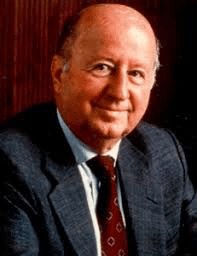
Portrait of Samuel Insull, Chicago utility pioneerSI
01

Samuel Insull

to · London to Paris

The man who invented the modern electric utility.

Insull arrived in America in 1881 as Thomas Edison's personal secretary. By 1892 he was running Chicago Edison, a company that was losing money. On a Christmas trip to Brighton, England in 1894 he noticed shop lights burning all night and learned the local utility billed on demand, not flat rates. By 1897 he was offering Chicagoans two-tier pricing, and bills dropped sharply.

His real insight was load factor: big central stations only pay off if they run all day, so he chased large industrial customers and electric railways to fill the curve. He merged his companies into Commonwealth Edison in 1907 and argued for state regulation in exchange for exclusive franchises. That deal, the regulated monopoly, is still how most of America's utilities work.

Then it fell apart. His holding companies controlled about $500 million of assets on roughly $27 million of equity, and the Depression wiped out some 600,000 shareholders. He fled to France and Greece, was extradited in 1934, and was acquitted on all counts. In 1938 he collapsed in the Concorde metro station in Paris with 30 francs on him. His collapse helped produce the Public Utility Holding Company Act of 1935.
Why he matters todayInsull's whole playbook was landing big, steady loads to make the grid economics work. A century later, data centers and the ERCOT large load queue are the same story at a different scale.
Portrait of George P. Mitchell, Texas shale gas pioneerGM
Image: Texas A&M University
02

George P. Mitchell

to · Galveston, Texas

The Texas wildcatter who unlocked shale gas.

The son of a Greek immigrant who ran a shoeshine shop in Galveston, Mitchell graduated top of his class in petroleum engineering from Texas A&M in 1940. His company, Mitchell Energy & Development, grew into a Fortune 500 firm and took part in roughly 10,000 wells, including more than 1,000 wildcats.

Through the 1980s and 1990s, while most of the industry thought he was wasting money, his team kept experimenting with hydraulic fracturing in the Barnett Shale near Fort Worth until they found a technique that made the gas economic. The rest of the industry copied it, paired it with horizontal drilling, and the US shale boom followed. Mitchell Energy was later acquired by Devon Energy.

He also built The Woodlands, the master-planned community north of Houston, and gave away hundreds of millions of dollars, much of it to sustainability science.

Why he matters todayCheap shale gas reshaped the US power stack. Gas-fired plants became the backbone of ERCOT, and gas prices still drive Texas power prices most hours of the year.
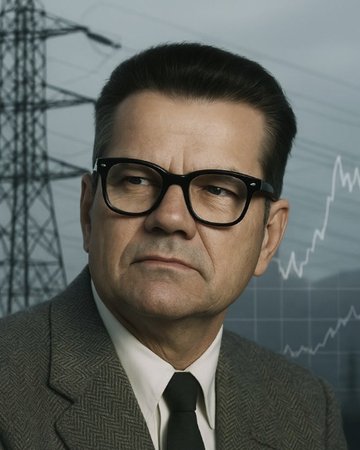
AI-generated illustration representing Fred C. Schweppe, not a photographFS
AI-generated illustration, not a photograph
03

Fred C. Schweppe

to · MIT Energy Laboratory

The professor behind nodal pricing and LMP.

Almost nobody outside the industry knows his name, yet every power trader in PJM or ERCOT works inside his framework. At MIT's Energy Laboratory in the early 1980s, Schweppe studied how electricity could be priced hour by hour to reflect its true cost, including a 1982 spot pricing study for Southern California Edison and PG&E.

His most radical idea was about transmission: instead of trying to price wires directly, calculate the price of energy at every node on the grid. The difference between two nodes is the price of moving power between them. That is locational marginal pricing.

He and his co-authors Michael Caramanis, Richard Tabors, and Roger Bohn laid out the full framework in Spot Pricing of Electricity (Kluwer, 1988). Within a decade regulators were debating locational pricing, and today nodal markets run across most of the US.

Why he matters todayERCOT went nodal in 2010. Every settlement point price, basis spread, and congestion trade in Texas traces back to Schweppe's work.

Read the original story: "If you work in power trading, you owe your life to this man" on LinkedIn, 13,500+ impressions
Also on LinkedIn: “Still true after all these years”, Ruben Feliu on Schweppe’s view that power problems are tougher than aerospace ones

Official portrait of Admiral Hyman G. RickoverHR
04

Hyman G. Rickover

to · Poland to Arlington, VA

The admiral who brought nuclear power to the grid.

Rickover came to the US as a six-year-old fleeing pogroms in Russian-occupied Poland and grew up in Chicago. After the war he pushed, against much of the Navy, for nuclear-powered submarines. The result was USS Nautilus, commissioned in 1954.

He then oversaw the Shippingport Atomic Power Station in Pennsylvania, the world's first commercial pressurized water reactor, which began delivering power in 1957. The pressurized water reactor design he championed became the dominant reactor type in the US commercial fleet.

Famously difficult and obsessed with quality, he served 63 years on active duty, the longest of any US military officer, and personally interviewed thousands of nuclear officers. The Navy's reactor program under his standards has never had a reactor accident.

Why he matters todayNuclear is back, driven by hyperscaler power deals, restarts, and small modular reactors. Most of today's US nuclear fleet descends from the technology he pushed into existence.
Portrait of Morris Llewellyn Cooke, first head of the Rural Electrification AdministrationMC
05

Morris Llewellyn Cooke

to · Carlisle, Pennsylvania

The engineer who wired rural America.

A mechanical engineer and disciple of Frederick Taylor's scientific management, Cooke spent the 1920s arguing that private utilities were ignoring the countryside. In the mid-1930s only about one in ten American farms had electricity.

Franklin Roosevelt made him the first administrator of the Rural Electrification Administration, which he ran from May 1935 to March 1937. The REA financed distribution lines in areas investor-owned utilities would not serve, and farmers organized member-owned electric cooperatives to borrow the money and build them.

Those co-ops still exist. Texas is home to Pedernales Electric Cooperative, the largest electric co-op in the country, founded in the late 1930s with the help of a young Lyndon Johnson.

Why he matters todayElectric co-ops are major buyers of power and major hosts of new large loads, in ERCOT and nationwide. Anyone selling into US power deals with Cooke's legacy.
Portrait of Anthony F. Lucas, driller of the Spindletop gusherAL
06

Anthony F. Lucas

to · Split to Washington, DC

The engineer whose gusher made Texas an energy state.

Born in Split on the Dalmatian coast, Lucas trained as an engineer, served in the Austrian navy, and settled in the US, where he became an expert on salt domes. Local believer Pattillo Higgins had long insisted there was oil under a low hill near Beaumont called Spindletop. Lucas took the bet.

On January 10, 1901, the well blew in, spraying oil more than a hundred feet into the air for days before it could be capped. Nothing like it had been seen before. Spindletop set off the Texas oil rush and helped give birth to companies that became Gulf Oil and Texaco.

Why he matters todaySpindletop is the origin story of Houston as the energy capital of the world, and of the Gulf Coast industrial load that still defines the ERCOT demand map.
Portrait of David E. Lilienthal, TVA chairman and first AEC chairmanDL
07

David E. Lilienthal

to · Illinois to New York

The face of public power in America.

A young utility lawyer from Wisconsin's regulatory commission, Lilienthal was appointed one of the three founding directors of the Tennessee Valley Authority in 1933. He fought the private utilities in court and in public, and later chaired the TVA, turning it into a symbol of what government-built power could do for a poor region.

In 1946 President Truman named him the first chairman of the Atomic Energy Commission, putting him in charge of the nation's nuclear program as it moved from weapons toward civilian power.

Why he matters todayThe public versus private power debate he fought is alive in every fight over municipal utilities, co-op territory, and who builds the next wave of generation.
Portrait of Charles Proteus Steinmetz, General Electric engineerCS
08

Charles Proteus Steinmetz

to · Breslau to Schenectady, NY

The genius who made AC power calculable.

Steinmetz fled Germany in 1889 after his socialist writing drew police attention, arrived in New York nearly penniless, and ended up as General Electric's most famous engineer. Small, with a curved spine, and rarely without a cigar, he became one of the best-known scientists in America.

His big contribution was mathematical: he showed engineers how to use complex numbers to analyze alternating current circuits, turning AC design from guesswork into something they could calculate. He also worked out the laws of magnetic losses in transformers and, late in life, built a machine that generated artificial lightning to study how it hit power lines.

Why he matters todayEvery transmission planner and grid engineer works with the tools he made standard. He is a great, underexposed human story for anyone in the industry.
Kenneth Lay, founder of EnronKL
09

Kenneth Lay

to · Missouri to Colorado

The cautionary tale of power trading.

Lay created Enron in 1985 from the merger of Houston Natural Gas and InterNorth. As gas and then power markets deregulated, Enron reinvented itself as a trading house, making markets in natural gas and electricity and launching the EnronOnline trading platform in 1999. For a few years it was the model every utility executive was told to copy.

It was also built on aggressive accounting and hidden debt. Enron went bankrupt in December 2001, at the time the largest bankruptcy in US history. Lay was convicted of fraud in May 2006 and died that July before sentencing, which led a court to vacate his conviction.

Why he matters todayEnron helped create modern power trading and then triggered the reforms that govern it, from Sarbanes-Oxley to FERC's market manipulation powers. Every trading desk still operates in its shadow.
Portrait of Edwin Drake, who drilled the first US commercial oil wellED
10

Edwin Drake

to · New York to Pennsylvania

The man who started the American oil industry, and died poor.

A former railroad conductor with no drilling experience, Drake was hired by investors in 1857 to find oil near Titusville, Pennsylvania. Locals mocked the project as "Drake's Folly." His key trick was driving iron pipe down through the loose ground to stop the hole collapsing.

In August 1859 the well struck oil at about 69 feet, the first commercial oil well in the United States. Drake never patented his method, lost his money in speculation, and spent his later years in poverty until Pennsylvania voted him a small pension.

Why he matters todayEvery barrel, every refinery, and every oil and gas fortune in Texas started with a borrowed idea from a man who never got rich from it.

Frequently asked

Who is considered the father of the modern electric utility?

Samuel Insull. At Chicago Edison and later Commonwealth Edison he combined large central stations, demand-based pricing, and state-regulated monopoly franchises into the model most US utilities still follow.

Who invented locational marginal pricing (LMP)?

LMP grew out of spot pricing theory developed by MIT professor Fred C. Schweppe and colleagues, published in the 1988 book Spot Pricing of Electricity. Nodal markets such as PJM and ERCOT are built on these ideas.

Who pioneered fracking for shale gas?

George P. Mitchell of Galveston, Texas. His company spent the 1980s and 1990s testing hydraulic fracturing techniques in the Barnett Shale until shale gas became economic.

What was the first commercial nuclear power plant in the US?

The Shippingport Atomic Power Station in Pennsylvania, a pressurized water reactor whose development was overseen by Admiral Hyman G. Rickover. It began generating power in 1957.

What started the Texas oil boom?

The Spindletop gusher near Beaumont, drilled by Anthony F. Lucas, which blew in on January 10, 1901.

The next Insull moment is happening now

Data centers, LNG, and industrial reshoring are adding more large load to the US grid than anything since Insull's era. EnergyLeads helps energy companies find those buyers before the RFP goes out.

See how it works

Sources & further reading