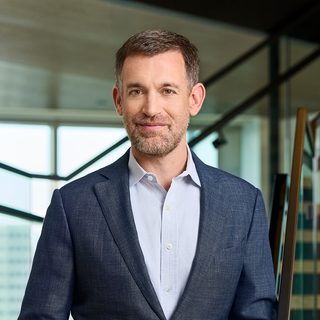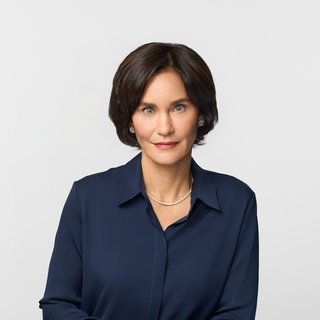
The giving started while he was still trading. Arnold told Levitt that his job "had limited direct social value," that he picked up a magazine listing top nonprofits at a supermarket checkout, and that he toured KIPP, a Houston charter school network, "then wrote them a $25,000 check, and ended up getting on the board" (1). Institutional Investor reported in 2010 that he and Laura had "earlier pledged $10 million" to KIPP (14). Laura Arnold, a Yale-trained lawyer, had worked as a mergers and acquisitions attorney and as an oil company executive (1, 49, 2).
The Laura and John Arnold Foundation dates from 2008, according to Arnold Ventures, which says it was "founded in 2008 by Laura and John Arnold with the launch of a foundation" (9). The IRS recognised the foundation's tax exemption in October 2009, according to ProPublica's copy of its records (48). Levitt, in 2022, gave 2010 as the founding year; the organization's own date is the better one (1, 9). In 2010 the couple signed the Giving Pledge. "We look upon our financial position with a mix of disbelief and humility, never having dreamed that we would be in this situation," they wrote (47). "Upon our death, the vast majority of our assets will be left to the Foundation" (47). The letter ends: "There is no more worthwhile work and no greater mission. And there is no reason for delay in making a difference" (47).
The money is large. Philanthropy Roundtable reported in 2014 that the foundation had been "seeded with $890 million from the fortune John Arnold earned trading natural gas" (50). The Wall Street Journal reported in April 2014 that "since 2005, Mr. Arnold and his wife have given nearly $241 million to a range of causes" (11). In 2019 the Arnolds folded the foundation, a donor-advised fund and their advocacy group into a limited liability company, Arnold Ventures, so that, in Laura Arnold's words as reported by the Chronicle of Philanthropy, they could "do whatever it takes" to "attack an issue" (12). The foundation still files with the IRS. Its 2023 Form 990-PF reported total assets of $4.31 billion, contributions received of $483.6 million and charitable disbursements of $163.4 million (48). Its 2024 return, filed in November 2025, reported total assets of $4.77 billion (48). Arnold Ventures says it has "more than 100 subject-matter experts" in Houston, New York and Washington, D.C., and works on criminal justice, education, health, infrastructure and public finance (9).
The method came from trading. "I had enough training to be able to read the academic research, so I start pulling up many of those studies, and it felt like the more I read, the less I knew about what worked in the world," he told Cowen (10). He concluded that "everybody in the chain was incentivized to find the positive result, whether it was the funder, the academic, the university, the journal, or the popular press" (10). Wired reported that the foundation's research integrity work had given "more than $80 million to science critics and reformers in the past five years alone," including an initial $5.25 million grant to found Brian Nosek's Center for Open Science (2). The epidemiologist John Ioannidis told Wired that "the Arnold Foundation has been the Medici of meta-research" (2). Arnold's own summary, posted on Twitter, was that "A new study shows …" are "the four most dangerous words" (2).
Not everyone liked the science work. When a foundation-funded investigation in The BMJ challenged the US dietary guidelines in 2015, Representative Jim McGovern said in a House hearing that doubts were being driven by a "former Enron executive," adding, "I don't know what Enron knows about dietary guidelines" (2).
The pension work drew the hardest fight. Institutional Investor reported in 2013 that the foundation advocated moving away from traditional defined benefit pensions toward "either some kind of defined contribution plan or a so-called cash balance plan," and was advising states such as Kentucky, whose retirement systems had "$33 billion in underfunded liabilities" (51). Rhode Island, where state treasurer Gina Raimondo published a report called "Truth in Numbers" in June 2011 and campaigned for a pension overhaul, became a model; the Philanthropy Roundtable quoted her message: "It's not politics. It's math" (50). Arnold explained the choice of issue in 2014: "We as a foundation get drawn to issues where actors who are involved in shaping public policy have interests that differ from good long-term public policy," and pension reform "is an issue that does not have a natural advocate because the cost is dispersed across society as a whole and the benefit goes to a concentrated few" (52). The same profile reported that he grew more passionate about the issue after reading Steven Greenhut's 2009 book Plunder, a critique of public employee unions (52).
Unions fought back. The Wall Street Journal reported in April 2014 that public-employee unions were pressing PBS, the Pew Charitable Trusts and the Brookings Institution to stop taking Arnold money (11). PBS returned the $3.5 million that it and its New York affiliate WNET had received for a series called "The Pension Peril," while Brookings kept its grant and said donors could not influence its research (11). Jordan Marks of the union-funded National Public Pension Coalition said nonprofits that took the money had "rented their credibility to a right-wing ideologue bent on gutting public pensions" (11). Arnold called the campaign "an organized smear campaign." "The unions are very skilled at framing our intent as wanting to gut the savings of the middle class," he said. "We are just trying to get a better policy for America" (11). He told the paper that he backed liberal as well as conservative causes and had raised money for President Barack Obama (11). Matt Taibbi of Rolling Stone went further than the unions, calling Arnold a "young right-wing kingmaker with clear designs on becoming the next generation's Koch brothers" (53). Wired noted that the couple gave $10 million to keep Head Start running during the 2013 government shutdown, and that many of their issues, "from criminal justice reform to making prescription drugs more affordable, are decidedly progressive" (2).
Criminal justice became a larger part of the work. In 2013 the foundation released the Public Safety Assessment, or PSA, a pretrial tool that uses nine risk factors, based on a defendant's age, current charge and criminal and court history, to estimate the chances of a new arrest, a new violent arrest or a missed court date (54, 55). Researchers built it on about 750,000 cases from roughly 300 jurisdictions and validated it on another 500,000, according to a 2021 research summary from Advancing Pretrial Policy and Research, the project that supports jurisdictions using the tool (54). New Jersey adopted it on January 1, 2017 as part of a reform that "all but eliminated the use of monetary bail" (56). MDRC, an evaluation firm whose pretrial study lists Arnold Ventures as its supporter, found fewer arrest events after the reform, more people released without conditions, and less time in jail in the month after arrest (56, 57). The research summary says validation studies support the tool's predictions but that "further research is needed on the performance of the tool across race and gender subgroups" (54).
The critics are serious. In a 2026 article in the Texas A&M Law Review, the University of Richmond law professor Erin Collins argues that "Big Philanthropy amplifies the evidence-based paradigm for criminal system reform and all of its attendant harms" (12). She writes that while the foundation gives the PSA to jurisdictions free, "this gift does impose costs to public transparency, accountability, and democracy," and that participating jurisdictions sign an agreement under which they "will not treat the tool like an ordinary public record" (12). The tool was also tested in court. The mother of a man killed in 2017 sued the foundation, alleging that his alleged killer had been released because of a low PSA score; in June 2019 a federal judge in New Jersey held that the tool was not subject to product liability law (58). Collins counts about $400 million in Arnold criminal justice grants, by Arnold Ventures' own figure (12).
Arnold has turned the critique of concentrated philanthropic power on himself, at least in principle. He told Cowen that the tax treatment of endowments and private foundations is a "legacy of power," that the donor-advised fund exception "should be eliminated," and that the required annual payout should be "a little bit higher than the expected financial return" (10). "These organizations, including my foundation, should get weaker over time and not stronger," he said (10).
He also kept a foot in energy. In February 2024 Meta announced that Arnold had joined its board, describing him as "co-founder and chairman of Grid United, a developer of interregional, high-voltage transmission projects" (59). Heatmap described him in 2026 as an investor in the geothermal company Fervo (46). Forbes lists Arnold Ventures' areas as "criminal justice, higher education, health, infrastructure and public finance," and notes impact investments such as CivicaRx, which Helena describes as "a nonprofit generic pharmaceutical company" (15, 17).
His fortune has stayed roughly where it was when he stopped trading, when reporters put it at about $3 billion (44, 7). Forbes put it at $1.5 billion in 2007 (22), and Energy Risk reported $3.5 billion and a rank of 91st on the 2011 Forbes 400 (16). Forbes's real-time estimate on October 3, 2026 was $2.8 billion, with a philanthropy score of 5 (15). Collins, citing the Chronicle of Philanthropy, reports that the Arnolds gave $617 million in 2022 and $483 million in 2023 (12).
What connects the two careers is a way of reading evidence. In gas, Arnold looked for prices that the data said were wrong, in a market where, twice a year, "the fundamentals had to align with price" (10). In philanthropy he looks for programs and policies that the data say work, and he has found the feedback much slower. "Trading was and is a great industry because of the immediate feedback loops associated with it," he told Cowen, while philanthropy has "extraordinarily long feedback loops" (10). Asked for the key skill of a good philanthropist, he answered: "Trading's easier" (10).
The market he left has kept changing. Henry Hub gas averaged $2.19 per MMBtu in 2024 and $3.52 in 2025, a long way below the $8 to $9 years of his prime (41). Arnold now talks about rising power demand as an infrastructure problem (10). The three US grids "never really met," he told Cowen, "so, there's virtually no linkage across those," and new data centers raise the question of "how do you get 1 gigawatt or 2 or 3 gigawatts" into one point on the grid (10). "Bringing it into Texas is still very doable," he said (10). On September 14, 2026 Axios Pro ran a piece headlined "John Arnold: Permitting reform at a crossroads," which Arnold Ventures lists in its newsroom (60). The trader who once made Enron hundreds of millions of dollars by reading gas pipeline data now spends his money on the wires, rules and evidence that decide how energy gets built (59, 9).